

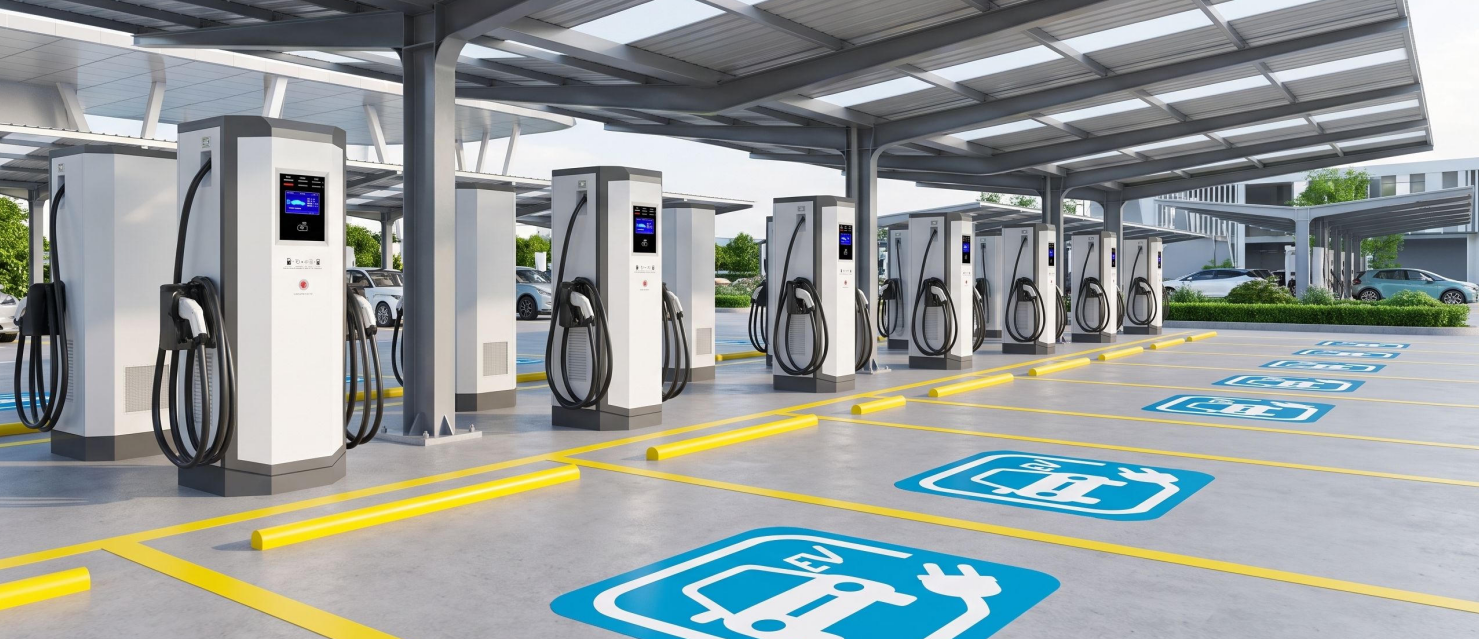
The electric vehicle revolution has brought with it a new language of range, kilowatts, and charging speeds. For the uninitiated, the promise of adding hundreds of miles of range in just 20 minutes is incredibly appealing. This is the domain of DC fast charging (DCFC), the technology that makes long-distance EV travel practical.
But before you plug in, it’s crucial to understand a fundamental question: Can every EV use a DC fast charger? The short answer is no. While the vast majority of modern EVs are compatible, several important caveats make it a case-by-case question.
Understanding the Need for Speed: AC vs. DC
To understand why not all cars are compatible, you need to understand the difference between AC and DC power. The grid supplies alternating current (AC), but an EV’s battery stores direct current (DC). With a standard Level 1 or Level 2 AC charger, the car’s onboard converter transforms the AC power into DC power for the battery. This process is slow, taking anywhere from 4 to 10 hours for a full charge.
A DC fast charger, however, bypasses the car’s onboard converter. It converts the AC power to DC inside the bulky charging station itself and sends high-voltage DC directly to the battery. This allows for power levels from 50 kW up to 350 kW, which can charge a battery to 80% in as little as 20 minutes to an hour.
The Three Main Barriers to Fast Charging
An EV cannot use a DC fast charger for three primary reasons: the car’s hardware capability, its physical charge port, and its ability to “speak” the correct language with the charger.
1. Hardware Capability (The Battery and Onboard Systems)
First, some vehicles simply aren’t built to accept DC fast charging. This is often the case with older electric vehicles or certain plug-in hybrids (PHEVs). PHEVs, which have smaller batteries and a gasoline backup engine, generally do not work with fast chargers, as they are designed for slower, overnight charging.
Even among EVs that do support DC fast charging, the maximum charging speed varies significantly. A smaller, entry-level EV might have a maximum charge rate of 50 kW, while a high-end luxury EV might accept 350 kW. An EV will only draw power at the maximum rate it and the charging station can handle—whichever is lower. So, plugging a car with a 50 kW limit into a 350 kW charger will still only charge at 50 kW.
2. The Physical Connection: A Tale of Three Plugs
The most immediate compatibility issue is the physical connector. The charging port on your car must match the plug on the DC fast charger. In the United States, you will primarily encounter three main types of DC fast-charging connectors:
- CCS (Combined Charging System): This is the most widely used standard for DC fast charging in North America and Europe. It is essentially a standard J1772 AC connector with two additional heavy-duty DC pins at the bottom. The vast majority of modern non-Tesla EVs, such as the Ford Mustang Mach-E, Volkswagen ID.4, and BMW i3, use the CCS connector for fast charging.
- NACS (North American Charging Standard): Originally developed by Tesla, the NACS connector is a sleek, compact design that supports both AC and DC charging. For years, it was exclusive to Tesla vehicles and the Supercharger network. However, many automakers have recently announced they will adopt the NACS standard for their future vehicles, beginning in 2025.
- CHAdeMO: This is an older DC fast-charging standard, primarily developed by Japanese companies. In the U.S., it is now almost exclusively found on the Nissan Leaf. As the Nissan Leaf is the last major holdout, finding CHAdeMO chargers at public stations is becoming increasingly difficult.
3. Digital Communication: The “Handshake”
Beyond the physical plug, a critical digital communication must occur between the EV and the charger for a safe and efficient session. This is governed by standards like IEC 61851-24, which specifies the digital communication protocol for controlling DC charging. The charger must “negotiate” with the vehicle to understand its voltage requirements, maximum power acceptance, and safety status. If the software protocols don’t match, the charging session won’t start, even if the connector fits.
Bridging the Gap with Adapters
The connector landscape is changing, and adapters are playing a key role. For example, a CCS-equipped EV can now use many Tesla Superchargers with a NACS to CCS adapter. Similarly, Tesla owners can use other DC fast chargers with a CCS to NACS adapter. As the industry moves toward NACS, these adapters will remain essential for bridging the gap between existing EV models and the new infrastructure.
Conclusion: Know Your EV
So, can every EV use a DC fast charger? The majority can, but it is not a universal feature.
While most modern battery-electric vehicles support DC fast charging, plug-in hybrids and some very early or small EVs do not. If your EV does support fast charging, you must ensure you are using a station with the correct physical connector (CCS, NACS, or CHAdeMO). The final piece of the puzzle is that the car’s maximum charging speed will determine how fast you can actually fill the battery.
Before you plan your next road trip, it is essential to consult your owner’s manual or check your vehicle’s specifications. Knowing your EV’s charging capabilities is the first step to a smooth and stress-free electric journey.
