

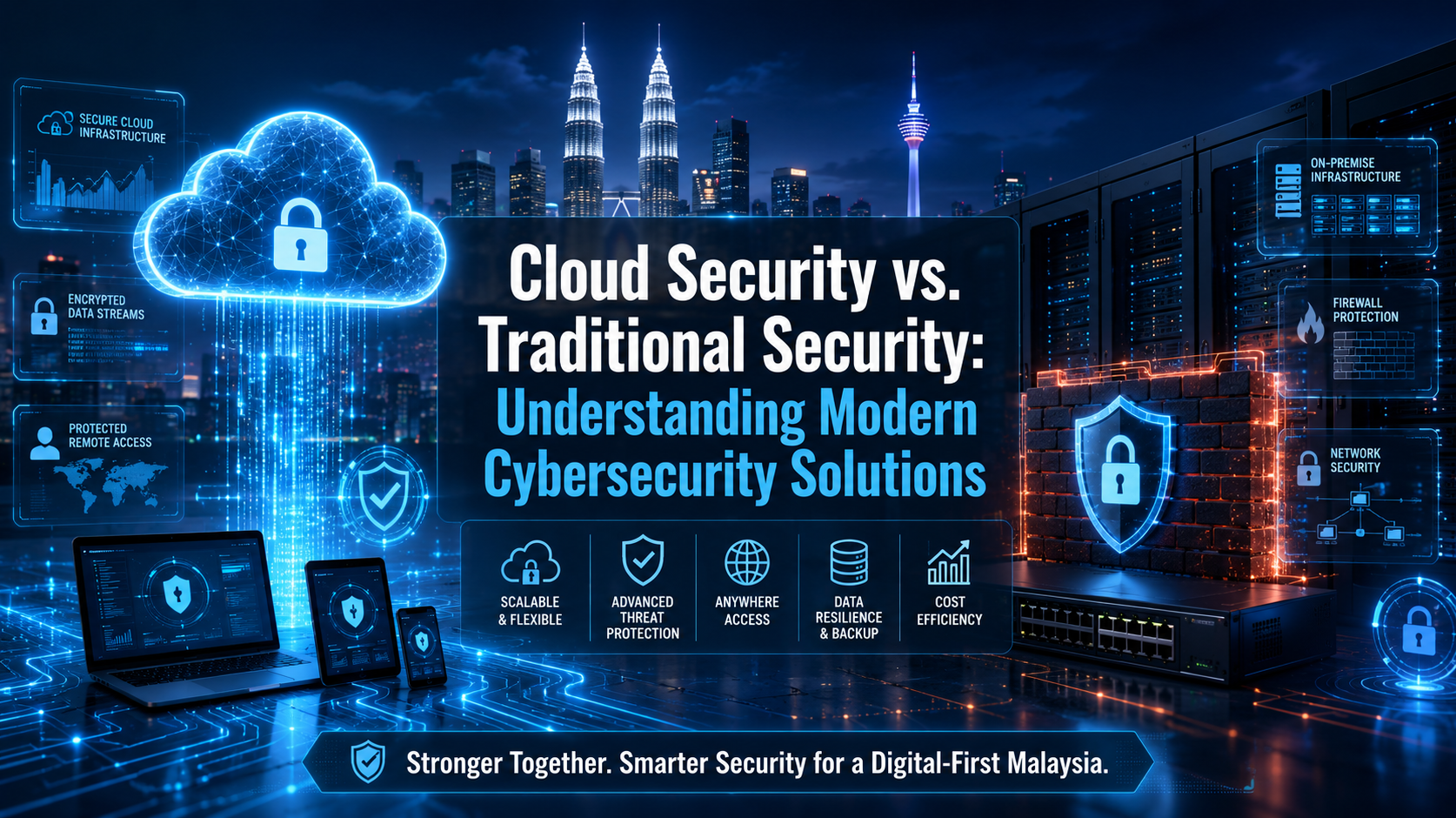
Malaysian businesses are moving faster into cloud platforms, digital tools, remote access, data analytics, and connected applications. This shift creates better speed and flexibility. It also changes how security must work.
Traditional security was built for offices, internal servers, fixed networks, and controlled access. Cloud security is built for a more flexible world. Employees log in from different places. Data moves across apps. Systems connect through APIs. Customers expect fast and safe digital experiences.
This is why modern cybersecurity solutions must cover both traditional systems and cloud environments. Zchwantech cybersecurity solutions help businesses understand these risks and build stronger protection across their digital operations. A good cybersecurity service provider does not only install tools. It helps companies protect people, data, systems, and growth.
What Traditional Security Means for Malaysian Businesses
Traditional cybersecurity focuses on protecting systems inside a controlled environment. This usually includes office networks, internal servers, desktops, laptops, firewalls, antivirus tools, and access points.
For many years, this model worked well. Most employees worked from the office. Most data stayed inside company systems. Most applications were hosted on internal infrastructure. Security teams could build a clear boundary around the business network.
Traditional security still has value. It protects physical devices, local servers, branch offices, and internal systems. Many Malaysian businesses still use legacy software, office networks, and on-premises infrastructure. These systems need firewalls, endpoint protection, patch management, backup controls, and access restrictions.
The challenge is simple. Traditional security works best when the environment is predictable. Modern business is no longer fully predictable.
What Cloud Security Means in Modern Cybersecurity Solutions
Cloud security protects digital assets that sit outside the old office network. This includes cloud applications, cloud storage, SaaS tools, remote users, APIs, virtual servers, databases, workloads, and hybrid systems.
Cloud environments are flexible. Businesses can scale faster, deploy applications quickly, and support users from different locations. This is useful for companies in Malaysia that want to grow without heavy infrastructure costs.
Cloud security makes that growth safer. It protects data in storage and during transfer. It controls who can access systems. It monitors activity in real time. It also helps reduce risk from misconfigured cloud settings, weak passwords, exposed APIs, and unsafe third-party integrations.
A modern cybersecurity service must support this new way of working. Cloud security is not optional when business systems depend on digital access every day.
Cloud Security vs. Traditional Security: The Main Differences
Traditional security protects a fixed boundary. Cloud security protects a moving environment.
In traditional systems, the main focus is the network perimeter. Firewalls and internal controls help keep threats outside. In cloud systems, there is no single perimeter. Users, apps, data, and workloads may be spread across different platforms and locations.
This makes identity and access control more important. Businesses need multi-factor authentication, role-based access, admin control, user activity logs, and clear approval flows. The goal is to make sure only the right people can access the right systems.
Monitoring also changes. Traditional systems may rely on scheduled scans and local network checks. Cloud systems need continuous visibility. Threats can appear through login attempts, API abuse, malware, unusual data downloads, or permission changes.
Cloud security also requires stronger configuration management. A small setting error can expose storage, databases, or user records. This is why businesses need proper cloud setup, regular reviews, and automated alerts.
Both models matter. Traditional security protects local systems. Cloud security protects modern digital operations.
Why Zchwantech Cybersecurity Solutions Support Cloud-First Businesses
Zchwantech supports businesses across digital transformation, cloud modernization, cybersecurity, AI, data intelligence, and custom application development. This mix is important because security can no longer sit alone.
A company that moves to cloud platforms needs secure infrastructure. A company that builds custom software needs secure coding and testing. A company that uses big data analytics needs protected data pipelines. A company that explores crypto solutions or biometric digital identity needs stronger controls from the beginning.
Zchwantech cybersecurity solutions are built around practical business needs. They support threat detection, secure deployment, endpoint protection, firewalls, monitoring, data protection, and ongoing security improvement.
The value is not only in technology. The value is in building security that matches how the business actually works.
A Zchwantech cybersecurity service can help reduce operational risk, improve visibility, and support safer growth for Malaysian businesses that depend on digital systems.
Why Traditional Security Alone Is No Longer Enough
Traditional security cannot fully protect modern digital activity by itself. The way people work has changed.
Employees may access business systems from home, client sites, mobile devices, shared networks, and personal internet connections. This increases exposure. A weak login, stolen password, or infected device can create serious risk.
Cloud apps also create new gaps. Businesses now use SaaS platforms for communication, finance, customer service, project management, storage, and analytics. These apps may connect with each other through APIs. If permissions are too broad or settings are not checked, sensitive data can become exposed.
Data also moves more than before. Customer records, business reports, payment data, analytics dashboards, and identity information may travel across many systems. Security must follow the data wherever it goes.
Traditional security is still useful, but it is not enough on its own. Businesses need cybersecurity solutions that protect office systems, cloud platforms, user identities, applications, endpoints, and data flows together.
How a Cybersecurity Service Provider Helps Businesses Choose the Right Approach
A strong cybersecurity service provider starts with risk assessment. Tool selection should not come first. The business needs to understand what it owns, where the data sits, who has access, and where the biggest risks are.
This includes reviewing infrastructure, cloud platforms, office networks, applications, user roles, compliance needs, backup processes, and incident response readiness.
Many Malaysian companies need hybrid security. They may still use office networks and legacy systems while also running cloud apps and remote access tools. This means the right strategy often combines traditional security and cloud security.
A cybersecurity service provider helps businesses choose the right mix. It can recommend better access control, endpoint protection, firewall improvements, cloud configuration, monitoring, and user security practices.
The goal is not to buy more tools. The goal is to build better protection with less confusion.
Key Features of a Modern Cybersecurity Service
A modern cybersecurity service should protect the full digital environment.
Firewall and endpoint protection are still important. Firewalls help control traffic and block unsafe access. Endpoint protection helps defend laptops, desktops, servers, and employee devices from malware and suspicious activity.
Threat detection and real-time monitoring are also essential. Businesses need alerts for unusual logins, abnormal traffic, malware activity, unauthorized access, and possible data exposure. Fast detection helps teams respond before a small issue becomes a serious incident.
Secure cloud configuration is another key area. Cloud platforms need proper access rules, encrypted storage, backup policies, workload protection, and permission reviews. Poor settings can create major security problems.
Data protection also matters. Businesses must protect customer records, employee data, financial details, business documents, and sensitive reports. Strong governance supports customer trust and audit readiness.
A good cybersecurity service brings these pieces together. It creates a security framework that supports daily operations, not just emergency response.
How Cybersecurity Connects With Other Digital Solutions
Cybersecurity is connected to every part of digital transformation.
Cloud management needs security to protect uptime, access, storage, backups, and disaster recovery. Without strong security, cloud systems can become unstable and risky.
Big data analytics needs clean and protected data. Analytics platforms depend on data pipelines, dashboards, reports, and user access. If the data is exposed or manipulated, business decisions become weaker.
Custom development also needs security from the start. Secure coding, API testing, QA testing services, penetration testing, performance testing, and regular updates reduce hidden weaknesses.
Crypto solutions need even stronger protection because they deal with digital assets, transactions, wallets, and smart contracts. Biometric digital identity platforms also require serious protection because they handle sensitive identity data.
This is why cybersecurity solutions should not be treated as a final layer. Security should be part of planning, development, deployment, monitoring, and long-term improvement.
Conclusion: Modern Cybersecurity Solutions Need Both Strategy and Execution
Cloud security and traditional security protect different parts of the business. One is not replacing the other completely. Malaysian companies need the right mix based on their systems, users, risks, and growth plans.
Traditional security protects office networks, devices, and internal systems. Cloud security protects flexible platforms, remote access, data flows, cloud apps, and modern workloads.
Zchwantech helps businesses approach cybersecurity with a broader view. Zchwantech cybersecurity service supports companies that need safer cloud adoption, stronger infrastructure, better monitoring, and practical protection across digital operations.
A trusted cybersecurity service provider should help businesses reduce risk, improve resilience, and build confidence in every system they use.
For practical and secure cybersecurity solutions, contact sales@zchwantech.com.
